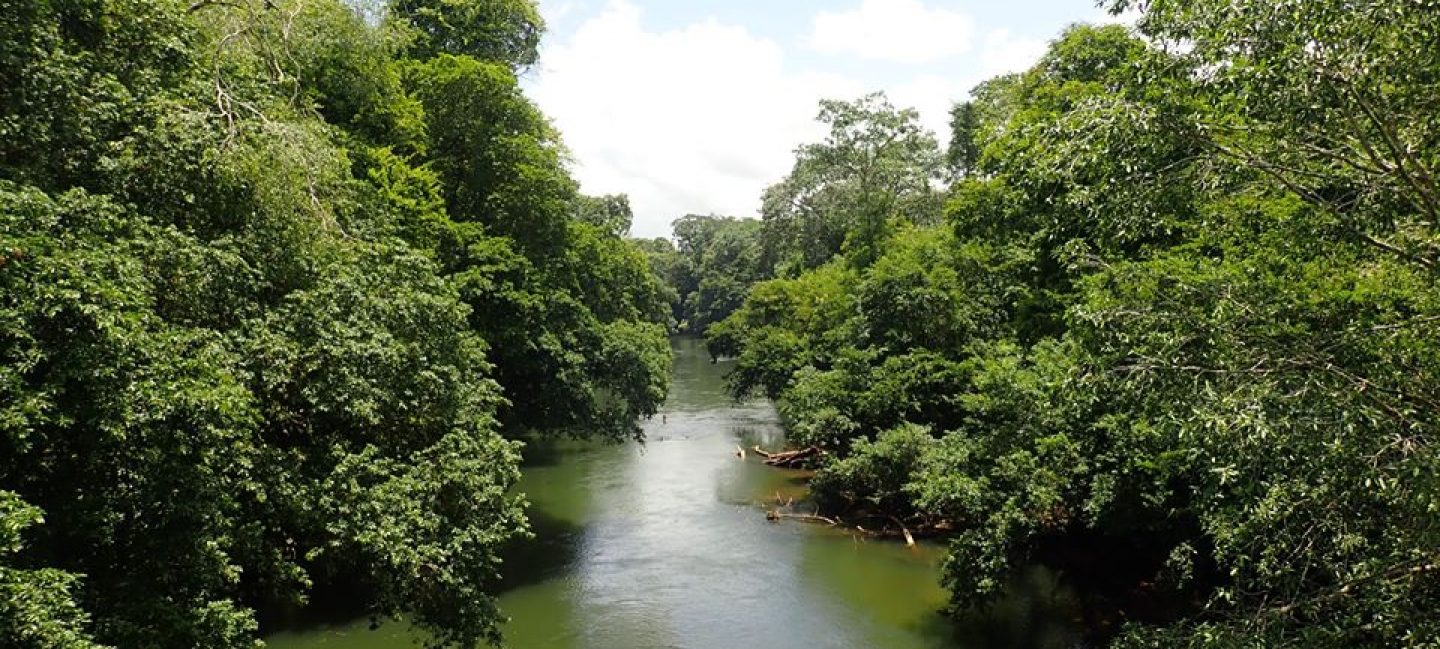
“Epithet after epithet is found too weak to convey to those who have not visited the inter-tropical regions the sensation of delight which the mind experiences…The land is one great wild, untidy, luxuriant hothouse, made by Nature for herself…a thousand beauties unite into one perfect scene…to behold, if such were possible, the products of another planet, the glories of another world.”
– Charles Darwin
Darwin, among other great Victorian naturalist-explorers, knew that the tropics represented the ultimate biological experience. Nowhere is this more apparent than at La Selva Biological Station, the third site our course is visiting. La Selva (literally, “The Jungle”) is the epitome of Neotropical diversity. Located on the foothills of Braulio-Carrillo National Park on Costa Rica’s Caribbean slope, this wet-humid ecosystem is our opportunity to be immersed in a biologically intact and well-studied lowland tropical rainforest that rivals the complexity of the Amazon. The station is a hive of research activity surrounded by rainforest. Inevitably, the division between the station grounds and “the field” is blurred here; a menagerie of birds, mammals, reptiles, and insects overflow from the surrounding primary forest and colonize the station, as if to showcase nature’s bounty to a human audience that can appreciate, if not comprehend, the beautiful enigma that is tropical nature.
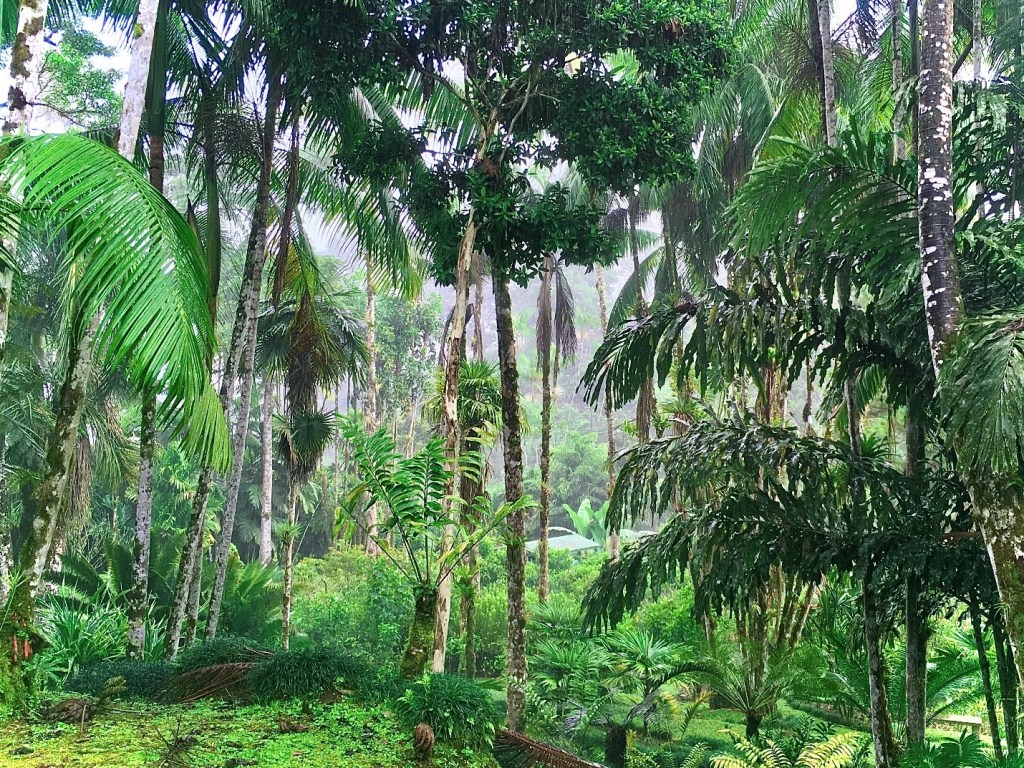
For those familiar with La Selva’s reputation as a germination ground for tropical biologists, to be here feels like a rite of passage. Giants such as David Attenborough, E.O. Wilson, Robert MacArthur and Daniel Janzen have all worked and lived here, inspired by the same resplendent environment that surrounds us now.
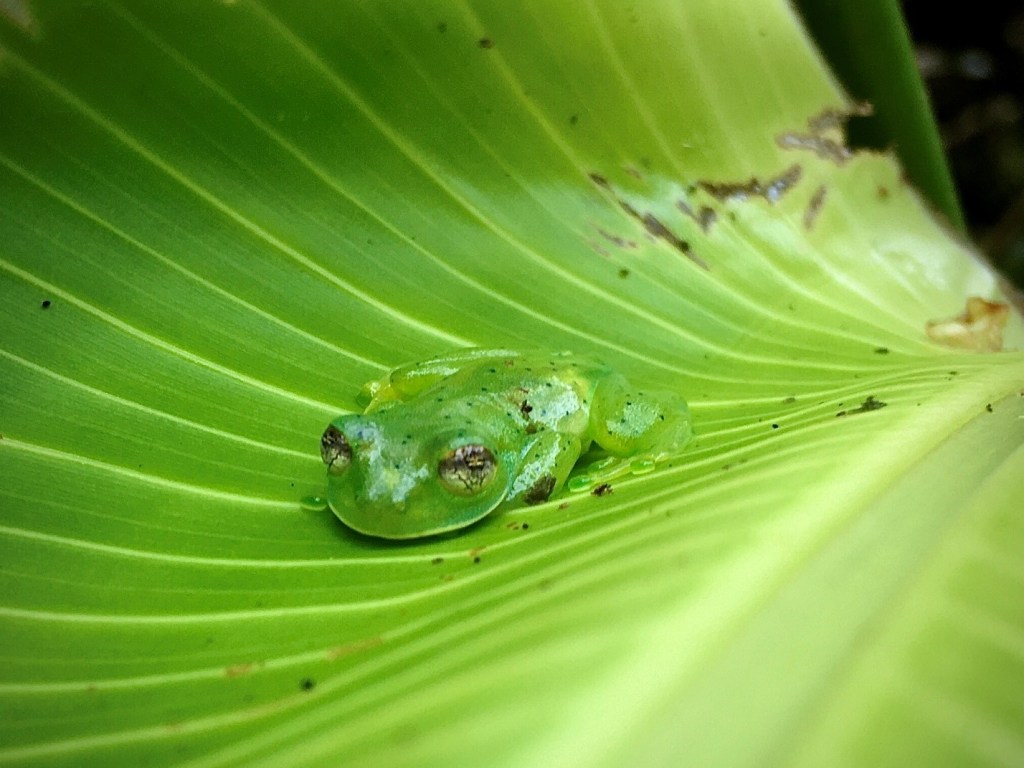
Growing up on a natural history-heavy diet, but forced to reconcile with a world that increasingly values hypothesis-driven science, I can appreciate the fine balance that OTS strikes between the two. Staying true to its roots, OTS begins our visit to La Selva by emphasizing a strong foundation in natural history. Our class breaks into small groups and commences on interactive hikes through the forest lead by naturalists and invited faculty, each of whom bring their own unique perspective of the field that, collectively, allows us to form a holistic picture of La Selva’s astounding biodiversity and biocomplexity.
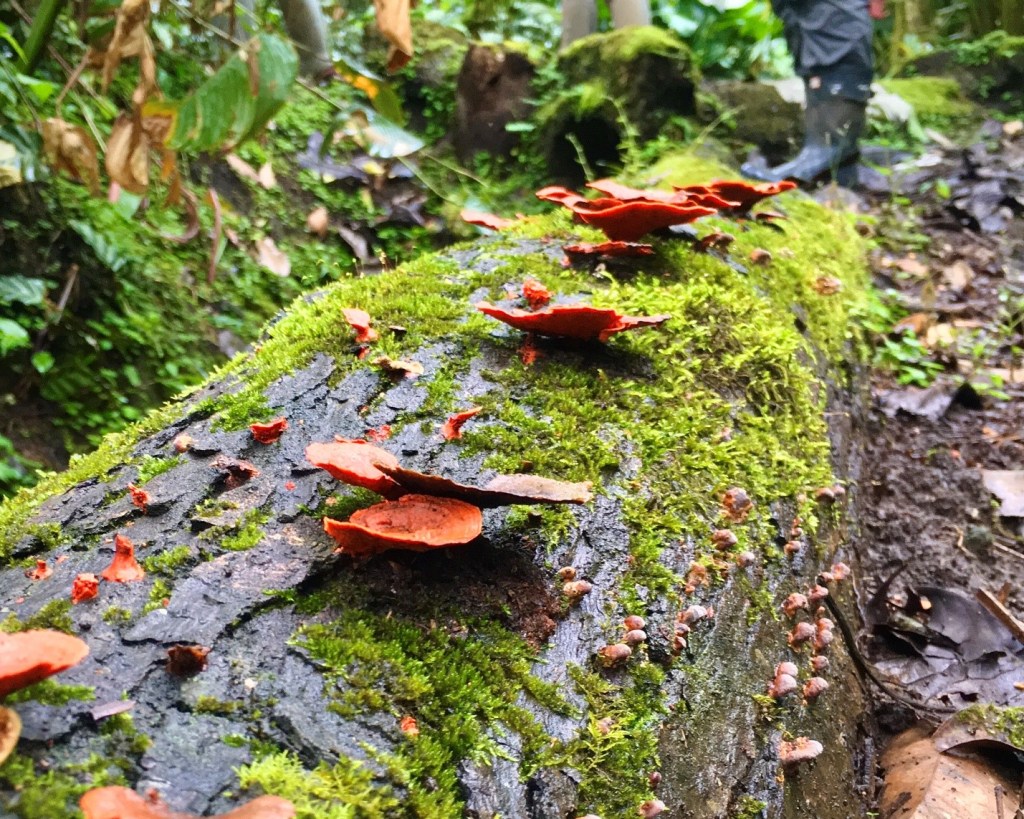
Edified, we begin to formulate original, provocative, short-term research projects both independently (IPs) and under the guidance of faculty (FLPs). Curiosity driven by thoughtful field observations are at the heart of all our scientific endeavors. In the process of practicing the scientific method, we interact with faculty mentors from diverse backgrounds and affiliations. Representatives of organizations as venerated as The Field Museum and Smithsonian Tropical Research Institute share perspectives of not only their graduate school experiences, but also of exciting career options outside of academia, such as conservation, government research, and science education. They shed light on the challenges and rewards of careers in (tropical) biology, galvanizing the next generation with tales of field work in remote jungles of distant lands, far from the conveniences of the developed world—or of La Selva.
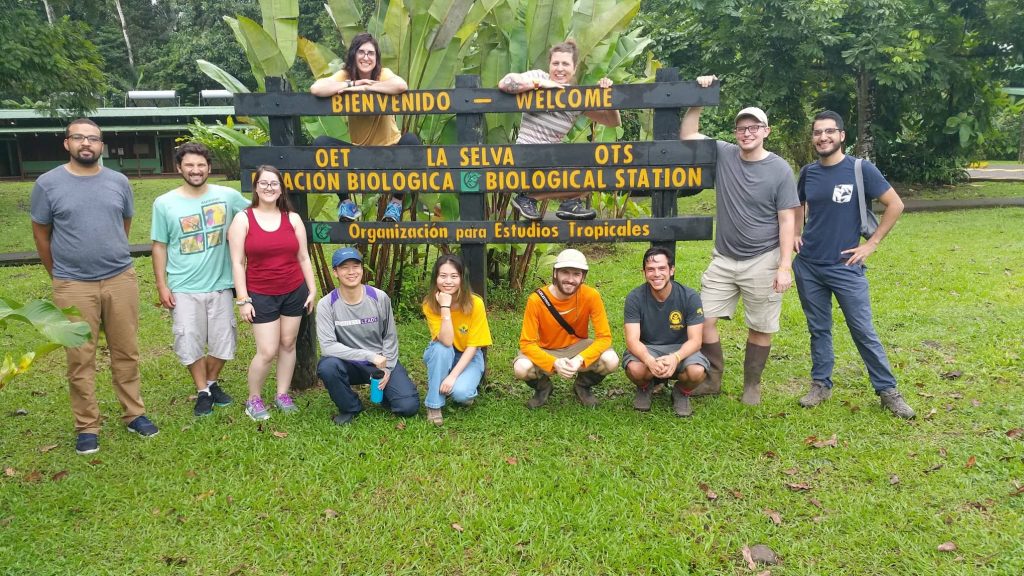
Almost invariably, we learn, their journey began as an OTS student. To be part of this course is to join perhaps the oldest and most recognized graduate course specialized in tropical biology there is. The OTS model for training has been, for over 50 years, centered on repetition. With repetition (FLP, IP, FLP, IP, etc.), our ability to formulate questions and design experiments using the scientific method, conduct field work, analyze data using code, write, create presentations, and present science in front of an audience advances rapidly. By the course’s completion, we will have each presented 7 times about varied projects. It is an intense, demanding work schedule, but the rewards eclipse the sacrifices. Every day brings another chance for discovery, growth, and lasting comradery. This is where the tropical biologists of the future are born.
-Anonymous student

 OTS Field Ecology 2020-1